

CryoSilico
MEMS-based sample carrier for cryo-EM
Unlock unparalleled imaging stability and workflow efficiency for your cryo-EM experiments with CryoSilico: an autoloader-compatible MEMS-based sample carrier.
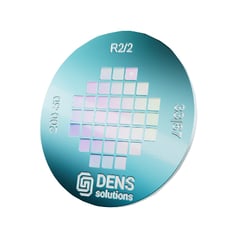 200 µm R2/2
|
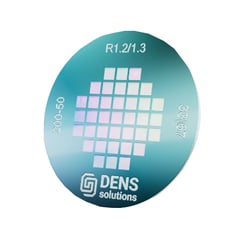 200 µm R1.2/1.3
|
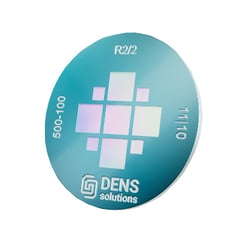 500 µm R2/2
|
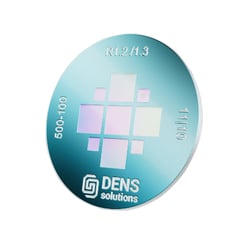 500 µm R1.2/1.3
|
|
|---|---|---|---|---|
| Membrane size | 200 × 200 µm (mesh 70) | 200 × 200 µm (mesh 70) | 500 × 500 µm (mesh 35) | 500 × 500 µm (mesh 35) |
| Hole size | 2 µm | 1.2 µm | 2 µm | 1.2 µm |
| Hole spacing | 2 µm | 1.3 µm | 2 µm | 1.3 µm |
| Optimal for | SPA | SPA | SPA / CryoET | SPA / CryoET |
| Window material | Monolayer graphene / Without graphene | Monolayer graphene/ Without Graphene | Monolayer graphene/ Without Graphene | Monolayer graphene/ Without Graphene |
Application results
Explore how CryoSilico outperforms standard cryo-EM grids.
Reduced beam-induced motion
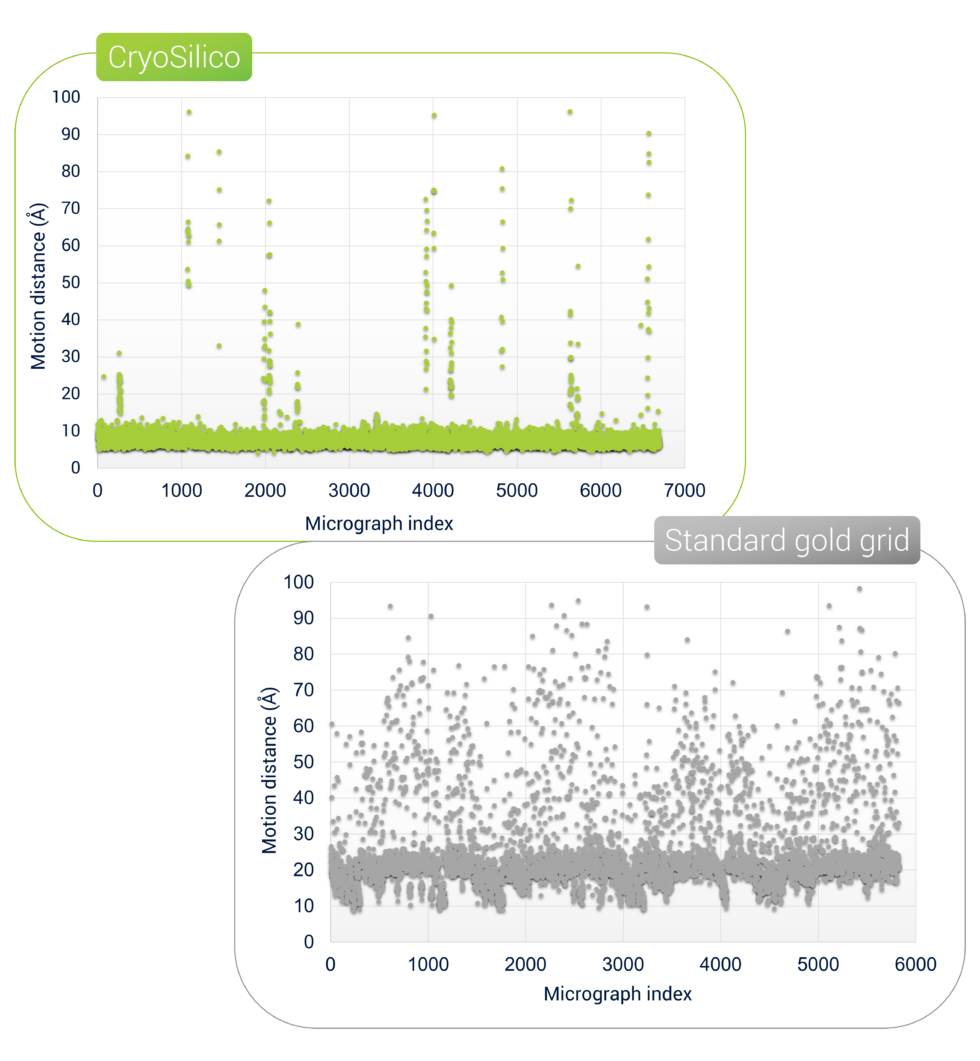
CryoSilico demonstrates an impressive 50% reduction in beam-induced movement, with most exposures showing around 10Å compared to 20Å for standard gold grids. This stability is achieved by combining the ultra-flat silicon nitride membrane with the highly conductive monolayer graphene.
Source: Dr. Zhao Xiaowei, HHMI, Janelia Research Campus
Stable from the first frame
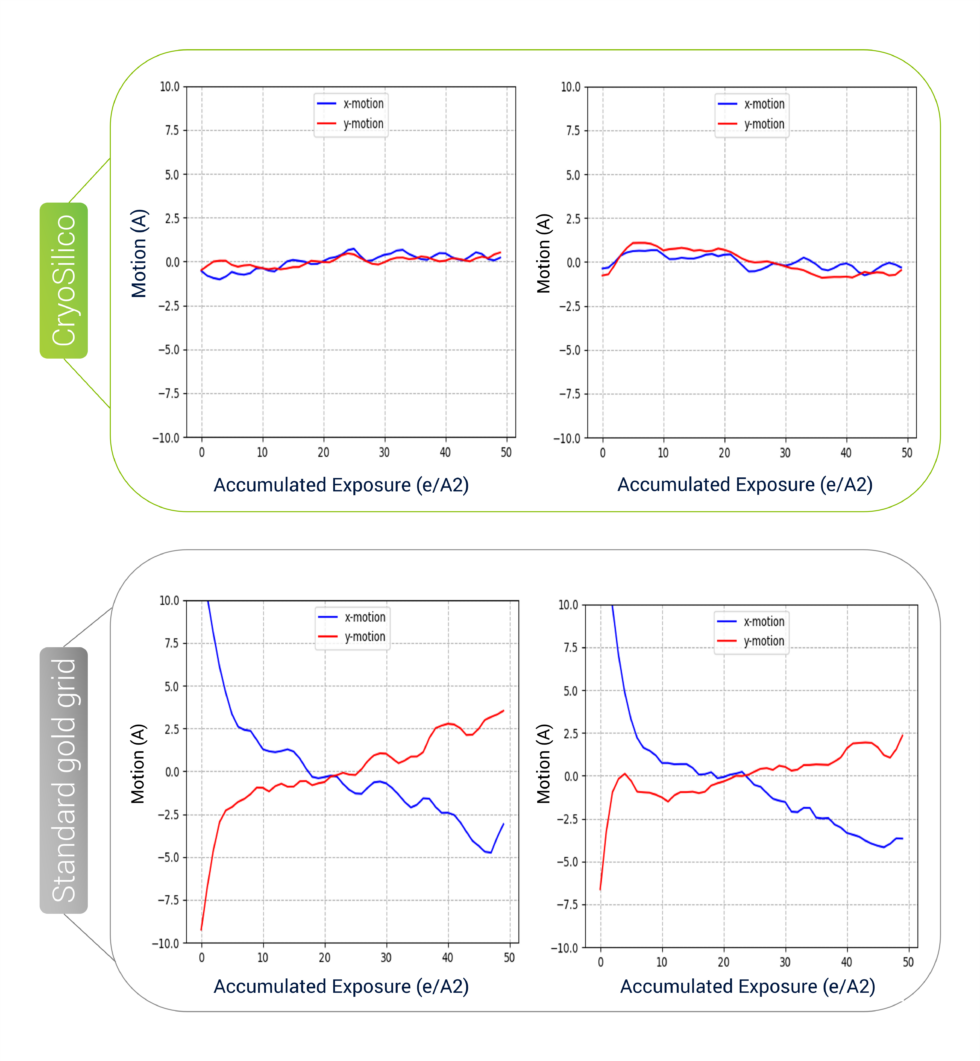
CryoSilico minimizes beam-induced movement during the critical first exposures, preserving protein integrity when it matters most. This stability ensures higher-quality data collection from the most valuable frames.
Source: Dr. Zhao Xiaowei, HHMI, Janelia Research Campus
Enhanced particle distribution and orientation
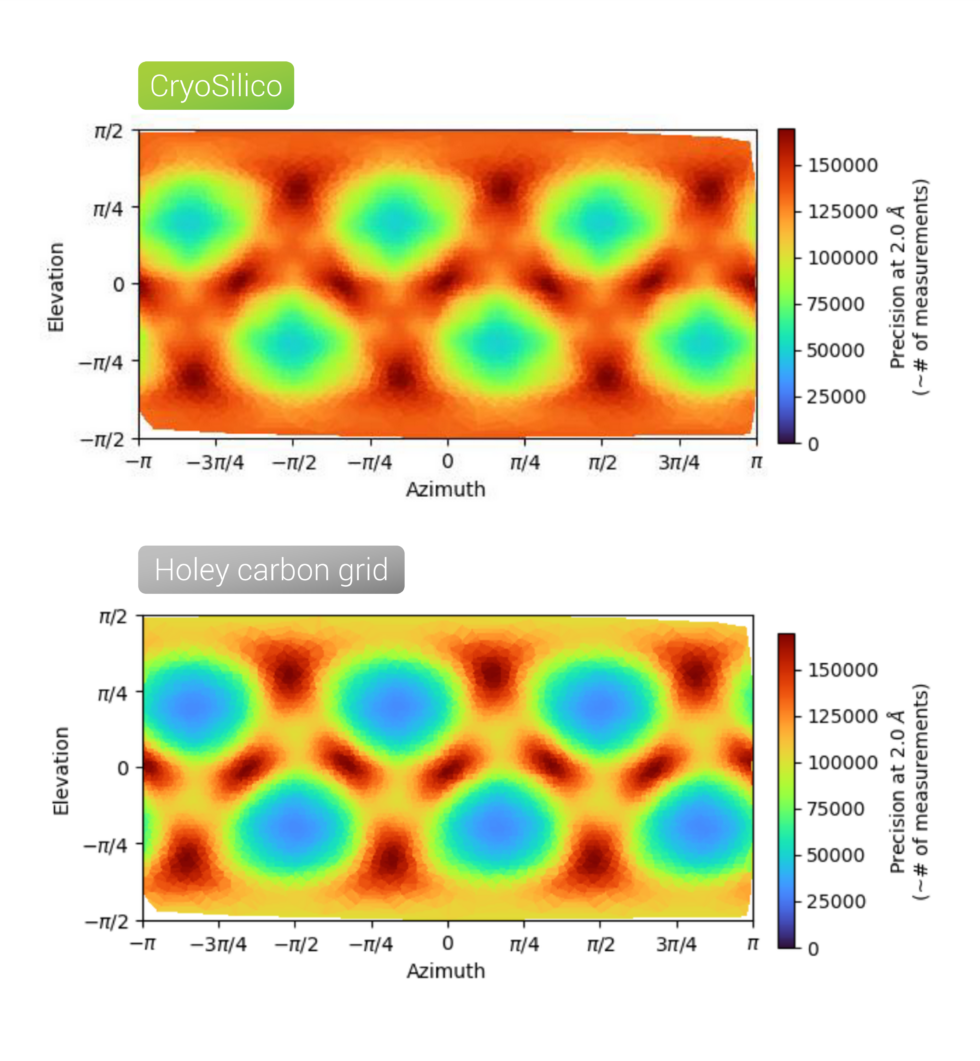
The angular distribution of DNA-binding proteins from starved cells (Dps) from Pyrococcus furiosus was analyzed using both CryoSilico and a holey carbon grid. CryoSilico shows significantly less preferred orientation, capturing a broader range of particle orientations including intermediate ones that grids without a support layer often fail to resolve. This results in improved particle distribution and orientation, enabling more comprehensive data acquisition.
Source: Dr. Daniel Bollschweiler, MPIE
Higher data collection efficiency
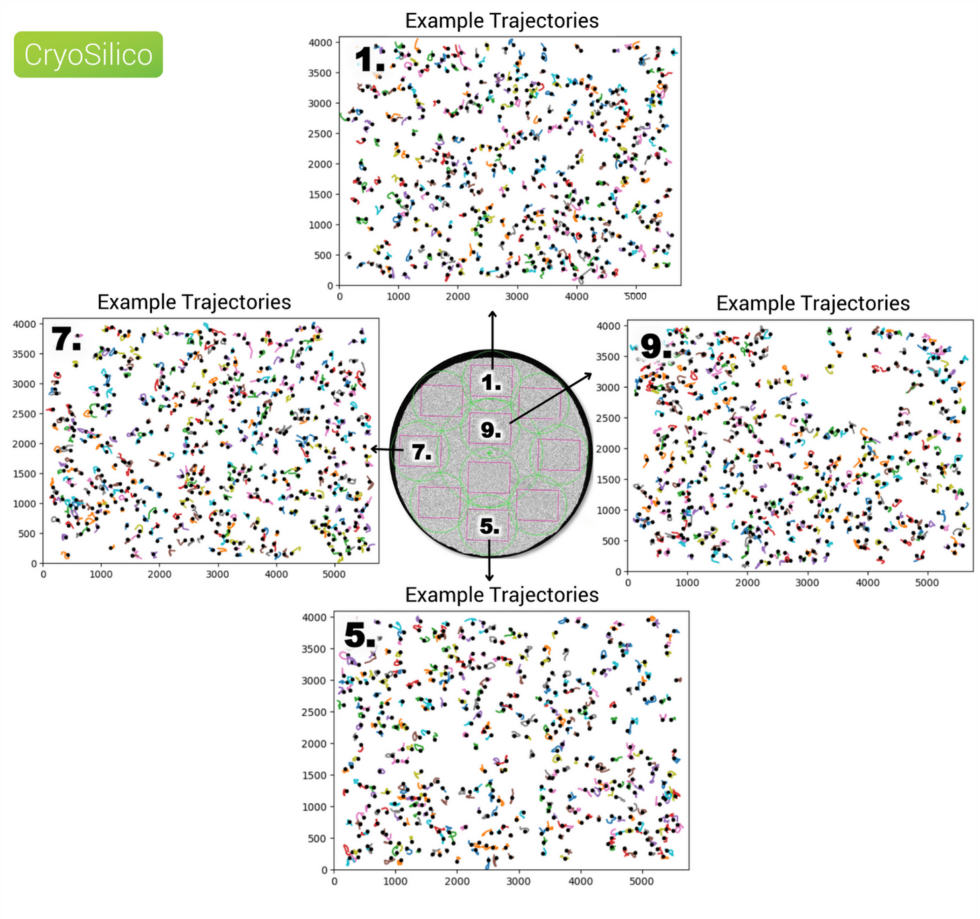
CryoSilico’s large holes enable multiple exposures per hole with minimal beam-induced motion and consistent particle distribution. Data acquisition is possible not just near the hole’s edge but also at its center, increasing shots per hole and enhancing efficiency.
Source: Dr. Daniel Bollschweiler, MPIE
Cryo-EM sample preparation
Cryo-EM sample preparation
Learn more about how our solutions address common challenges in cryo-EM sample preparation.
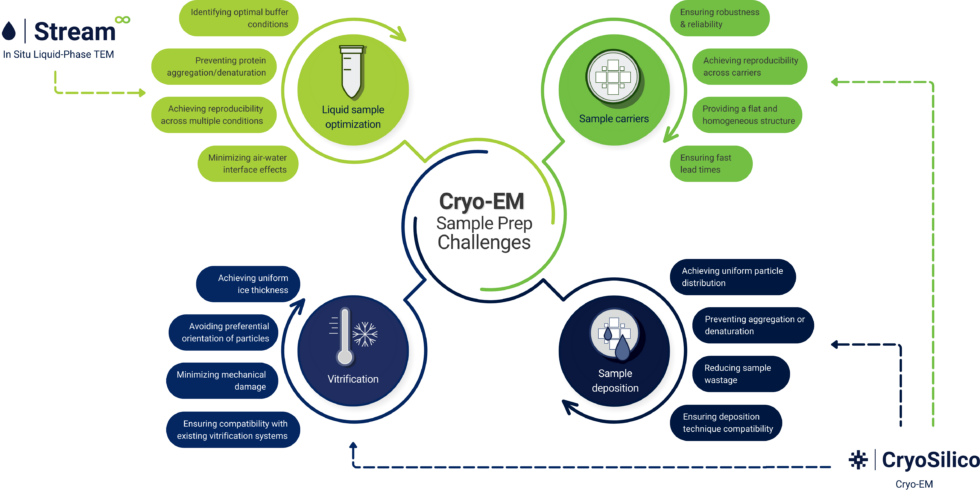
CryoSilico: Cryo-EM
- Sample carrier challenges: CryoSilico relies on a robust silicon frame to make the handling easier, and provides an ultra-flat SiNx/graphene membrane for optimized sample support and imaging quality. Moreover, the microfabrication technology ensures faster lead-times.
- Sample deposition challenges: CryoSilico is compatible with various deposition methods, and thanks to its ultra-flat surface and the lack of grid-bars, it enables uniform sample distribution and maximizing usable viewing area.
- Vitrification challenges: CryoSilico enables reproducible and uniform ice thickness, reducing particle orientation bias. Moreover, it is fully compatible with jetting and plunging methods, ensuring reliable performance during vitrification.
Stream Infinity: in situ liquid-phase TEM
- Liquid sample optimization: The Stream Infinity system enables the real-time visualization of proteins in liquid environments, allowing researchers to dynamically test and optimize experimental conditions, such as pH, salt and additives, under controlled settings. This control helps improve reproducibility and minimize air-water interface effects.
Resources
Brochure
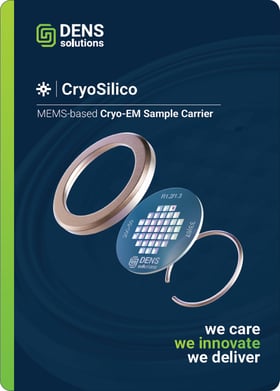
Download the CryoSilico brochure
For information on product variants, benefits and applications.
Download Brochure