

HydroBolt
Bulk electrochemical stage for SEM, FIB and benchtop experiments
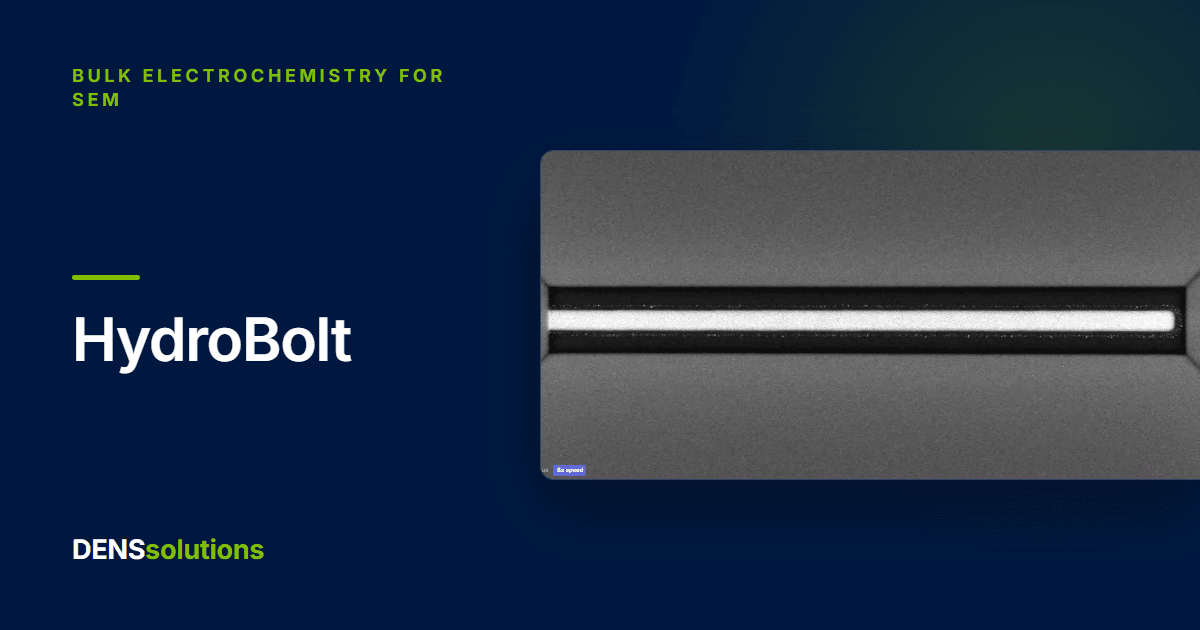
HydroBolt is the new bulk electrochemistry stage from DENSsolutions, built specifically for scanning electron microscopes and benchtop use. Perform real-time electrochemical tests while visually observing your sample's behavior at varying magnifications and scales.
Why HydroBolt
Three capabilities, one stage
What you can observe while the cell is in operation, how the setup keeps the measured potential correct, and how the same chip carries the sample on to the TEM.
In situ electrochemical studies
- Liquid biasing SEM characterization. Enables in situ electrochemistry in SEM and FIB instruments using a MEMS-based stage with mL-scale volume.
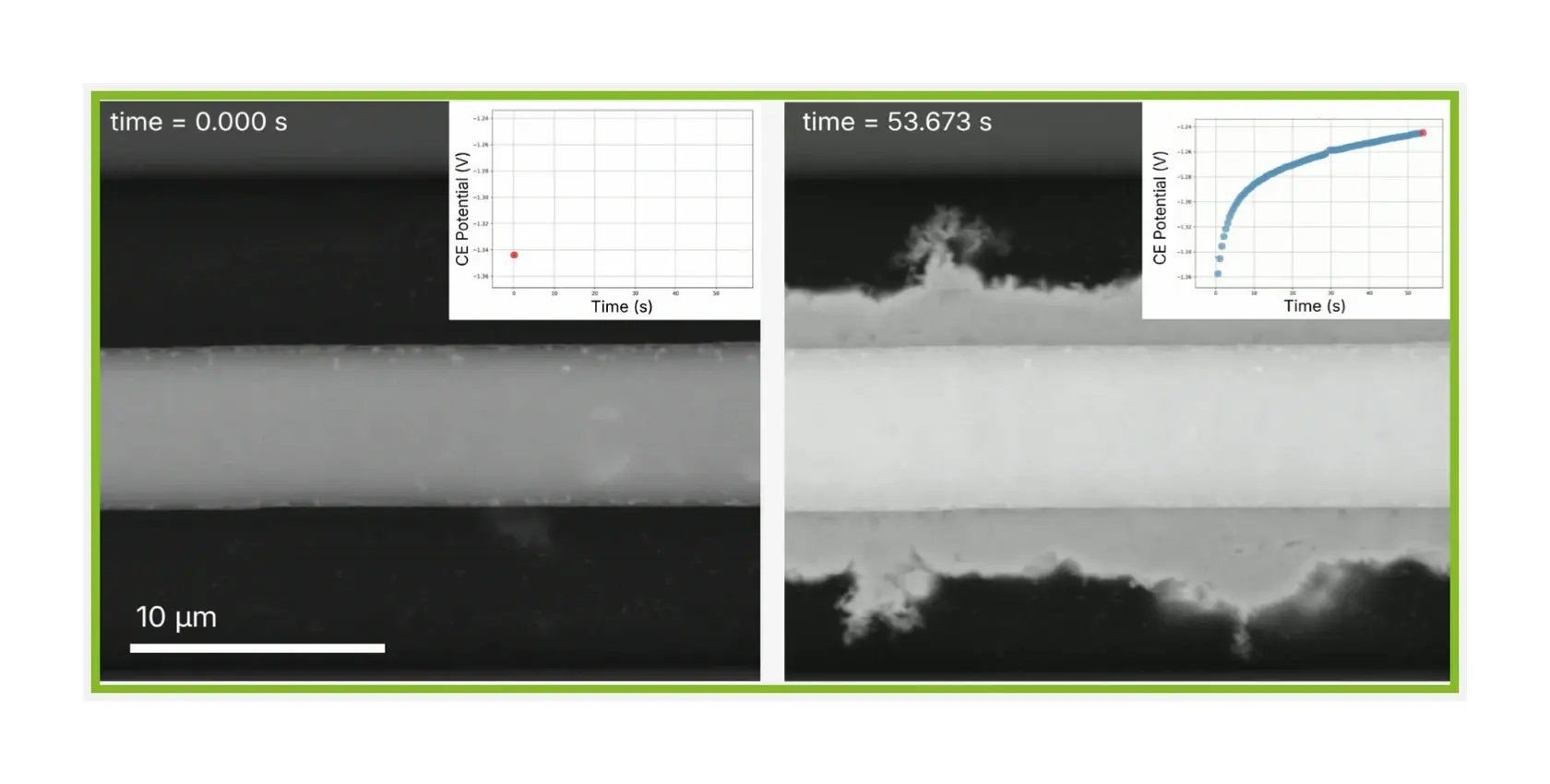
- Real-time observation. Observe real-time dynamics like electrodeposition, dendrite growth, and electrode degradation, correlating physical changes with electrochemical data.
- Broad compatibility. Works with TESCAN, Thermo Fisher Scientific (FEI), ZEISS and other microscope brands, as well as tabletop Phenom XL instrument. It supports SE, BSE and EDS detectors. The stage works in static or flow modes and is compatible with aqueous or organic electrolytes.
Electrodeposition of Zn on Pt working electrodes as a function of potential, at the start of the experiment and after 53.7 seconds, observed by SEM. Courtesy of Dr. R. Aymerich-Armengol, Ruhr-University Bochum, Dr. A. Garzón Manjón, Catalan Institute of Nanoscience and Nanotechnology, and Dr. S. Zhang, Max Planck Institute for Sustainable Materials, Düsseldorf.
Streamlined setup
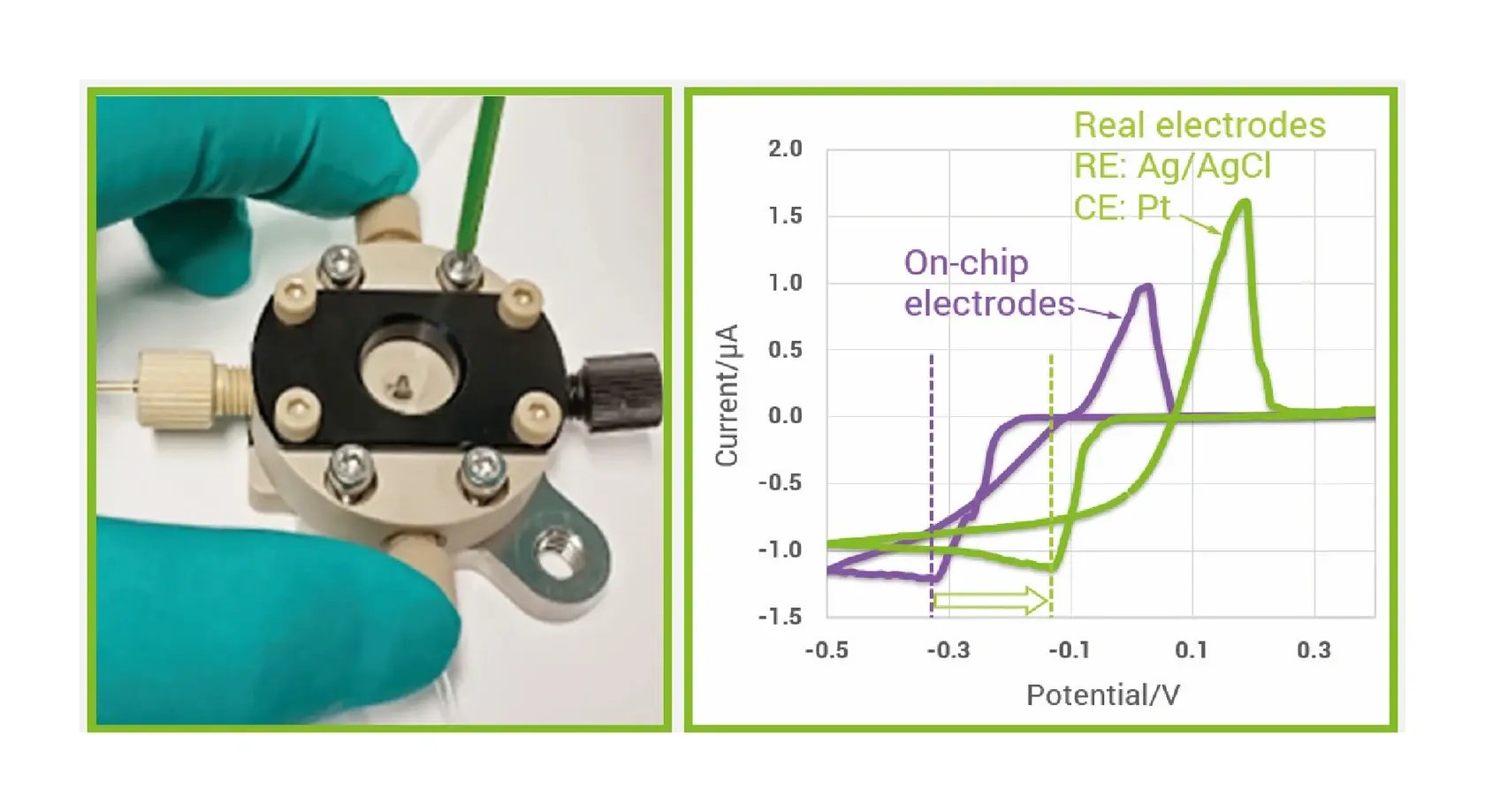
- True electrochemical response. Features external Ag/AgCl reference and Pt counter electrodes to prevent potential drift and enable prolonged cycling experiments, with an on-chip Pt or glassy carbon working electrode.
- Benchtop calibration capabilities. Electrical contacts and liquid flow ports allow users to conduct preliminary benchtop experiments and calibrate reference potentials, measuring how far the on-chip pseudo-reference shifts against the bulk Ag/AgCl electrode.
- Glove-box compatible assembly. The robust casing assembles quickly by tightening seal screws, allowing for simple setup directly inside a glovebox.
HydroBolt features a robust casing that is assembled by simply tightening the seal screws. The use of a real Ag/AgCl reference electrode ensures accurate and reliable electrochemical data. Cyclic voltammetry potential range: ±0.5 V; scan rate: 0.1 V/s; step: 0.01 V; electrolyte: 20 mM CuSO₄ + 10 mM KH₂PO₄.
Cross-platform characterization
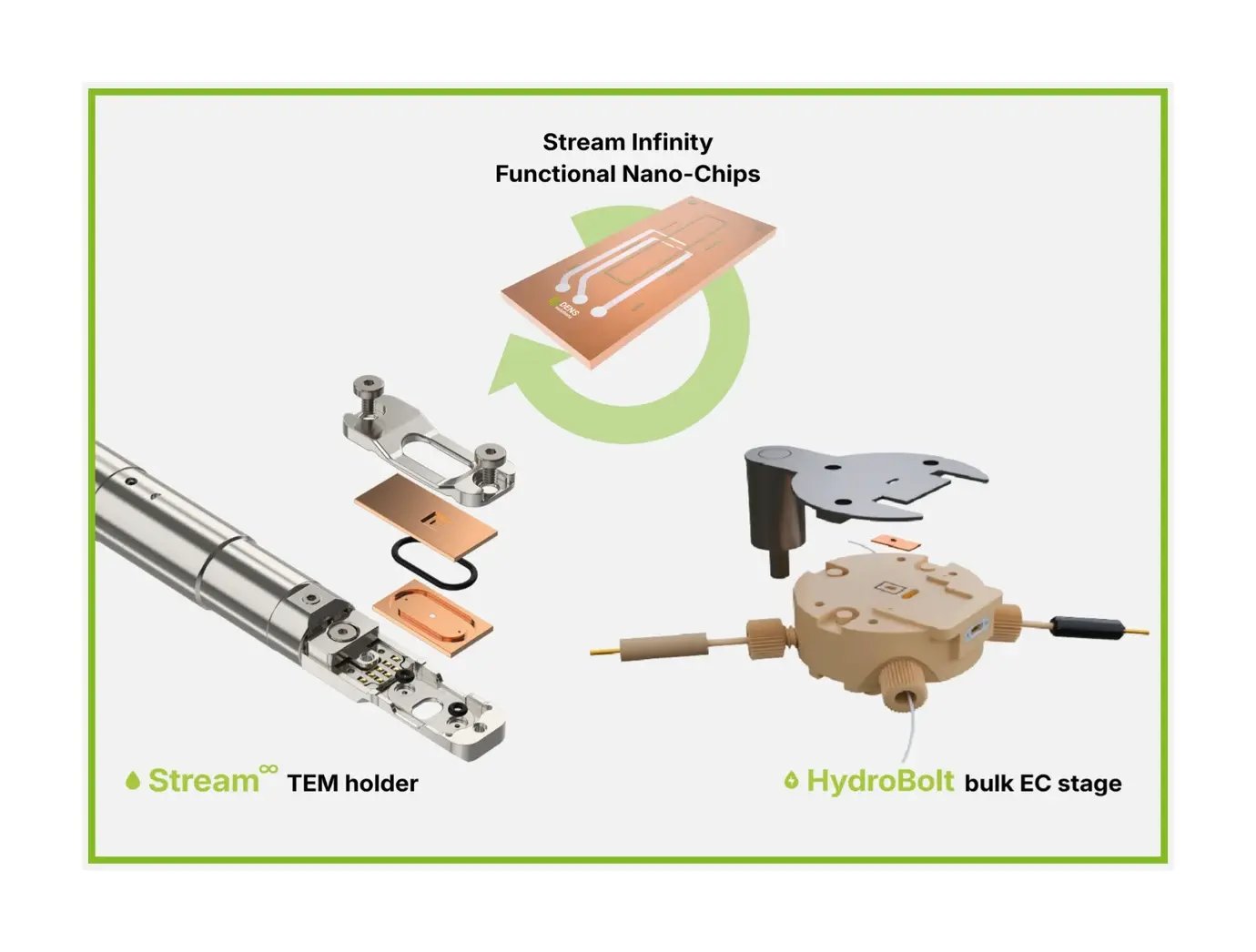
- Multi-scale and correlative analysis. Unlock cross-correlative liquid-phase TEM workflows with a shared universal Nano-Chip between in situ SEM and TEM holders. By transferring the exact same chip between the microscopes, one can perform experiments both at µm and nm scales, tracking specimen dynamics as a function of electrical potential, fluid flow and temperature.
- Plug-and-play integration. Shares the exact same software, connections, and control electronics as your existing DENSsolutions Stream Infinity TEM systems.
Application Fields
HydroBolt application fields

Batteries
Investigate battery electrode reactions, lithium plating/stripping, and solid-electrolyte interphase formation in real time.

Electrocatalysis
Observe electrocatalytic reactions and study the structure-activity relationship of catalysts in liquid environments.

Fuel cells
Study fuel cell catalyst degradation, membrane electrode assembly dynamics, and corrosion mechanisms.
Built on proven Stream technology
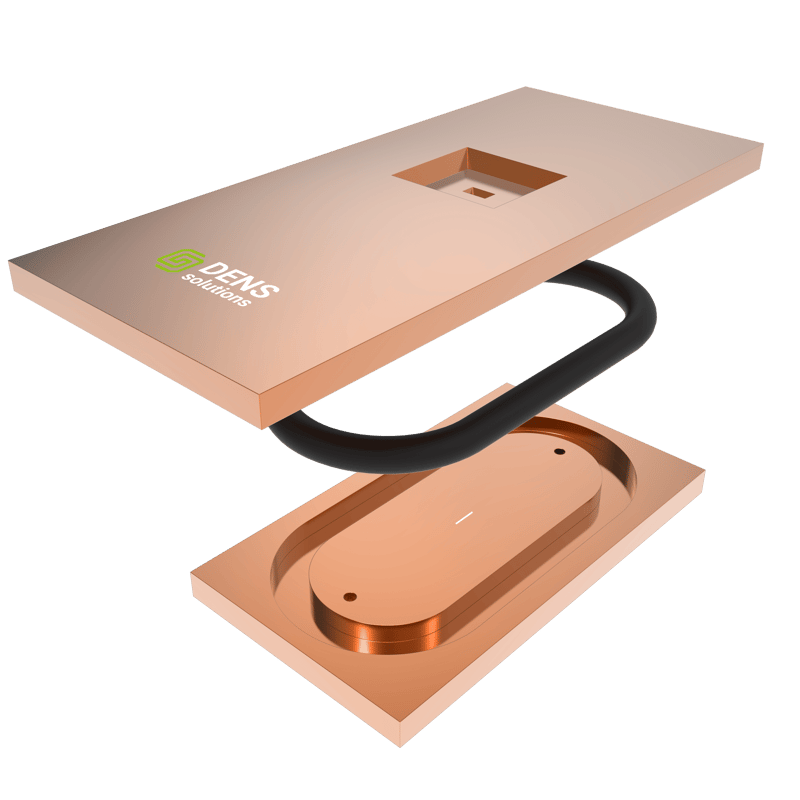
HydroBolt uses the same MEMS technology as the Stream Infinity TEM liquid and electrochemistry system. The microfluidic cell design, sealing approach, and electrode integration are directly derived from Stream's proven architecture, refined through years of TEM liquid experiments.
Researchers already working with Stream will find HydroBolt immediately familiar. The same chip handling, electrolyte loading procedures, and Impulse software environment apply, ensuring a smooth transition from TEM to SEM electrochemistry. HydroBolt also shares the same connections and control electronics as your existing Stream Infinity TEM system, so it needs no hardware of its own.
Resources
Brochure
Download the HydroBolt brochure
For more information on workflow, applications and specifications.
Download the brochure