In Situ TEM

Wildfire

In situ TEM heating

Heat your sample up to 1300 °C with highly accurate temperature control and unprecedented sample stability in all directions.

Heat to 1300 °C without compromising your TEM’s performance

The Wildfire in situ heating system enables in situ TEM studies of material behavior at elevated temperatures. Dynamic experiments can be conducted in a controlled and stable thermal environment, while the TEM keeps performing as it does with a standard holder.

You can heat your sample up to 1300 °C with accurate temperature control and exceptional stability in all directions. The optimized microheater design enables 4-point probe measurements and supports a wide range of sample types, including nanoparticles, FIB lamellae, nanowires and 2D materials.

Typical experiments include precipitation hardening of metals and alloys, ceramics sintering, the stability of catalyst nanoparticles, interdiffusion in semiconductor heterostructures and composites, defect chemistry in low dimensional materials and the degradation of solar cells.

Why researchers choose Wildfire

01

Reliable sample preparation

  • Drop-casted particles are in the field of view. The capillary effect is greatly reduced.
  • Best quality FIB lamellae. Prepare clean FIB lamellae by milling directly on the chip while maintaining heating accuracy and uniformity, using the DENSsolutions FIB stub and our verified FIB sample preparation procedure.
  • Easy and fast thin film transfer. No topography over large areas.

Gudeja-Marron et al. Phys. Rev. Materials 9 (2025) 06441
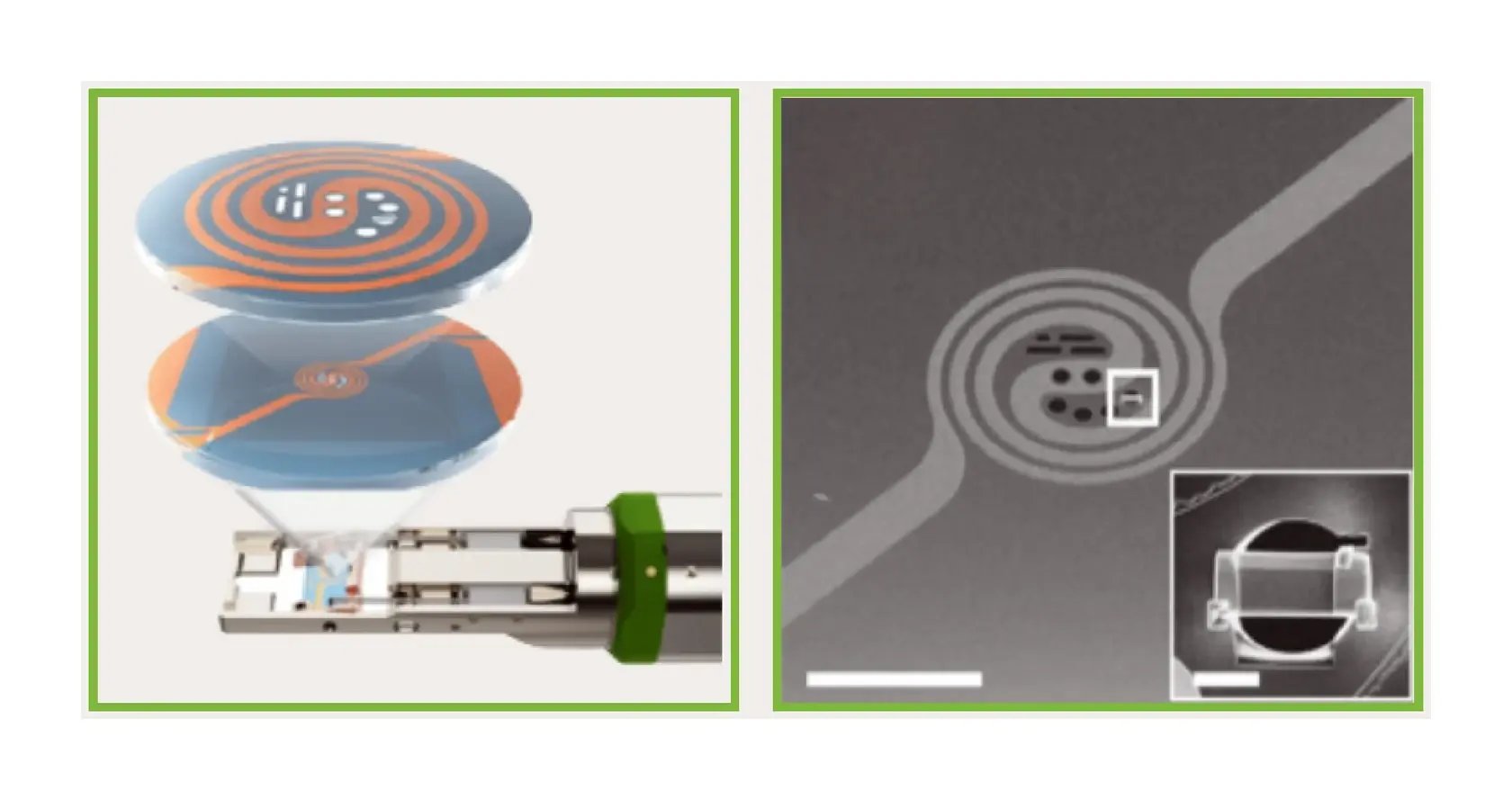
Drop-casting onto a Wildfire Nano-Chip, and a FIB lamella milled directly onto the chip
02

Precise temperature control

  • Highest achievable temperature. Capable of reaching temperatures as high as 1300 °C without compromising stability.
  • Accurate temperature control. Our 4-point probe heating technology ensures accurate control across the entire temperature range, with an exceptional stability of 0.005 °C.
  • High temperature homogeneity. Less than 0.5% variance in temperature between electron transparent windows.

Courtesy of Gatan. Acquired with Wildfire D6 (now H+ DT) and Gatan OneView IS camera on a Thermo Fisher Scientific (FEI) Tecnai TF20

03

Heat without compromise

  • High image stability. Minimal sample drift enables atomic-resolution imaging even at elevated temperatures.
  • Exceptional stability upon heating. Minor lateral (x,y) shift and minimal Z-displacement upon heating and cooling let you track the region of interest and preserve the ultimate resolution, without tedious stage movements.
  • Improved analytical capabilities. Reduced infrared radiation from the microheater allows EDS analysis up to 1000 °C.

Wang et al. Advanced Materials 40 (2023) 2303051
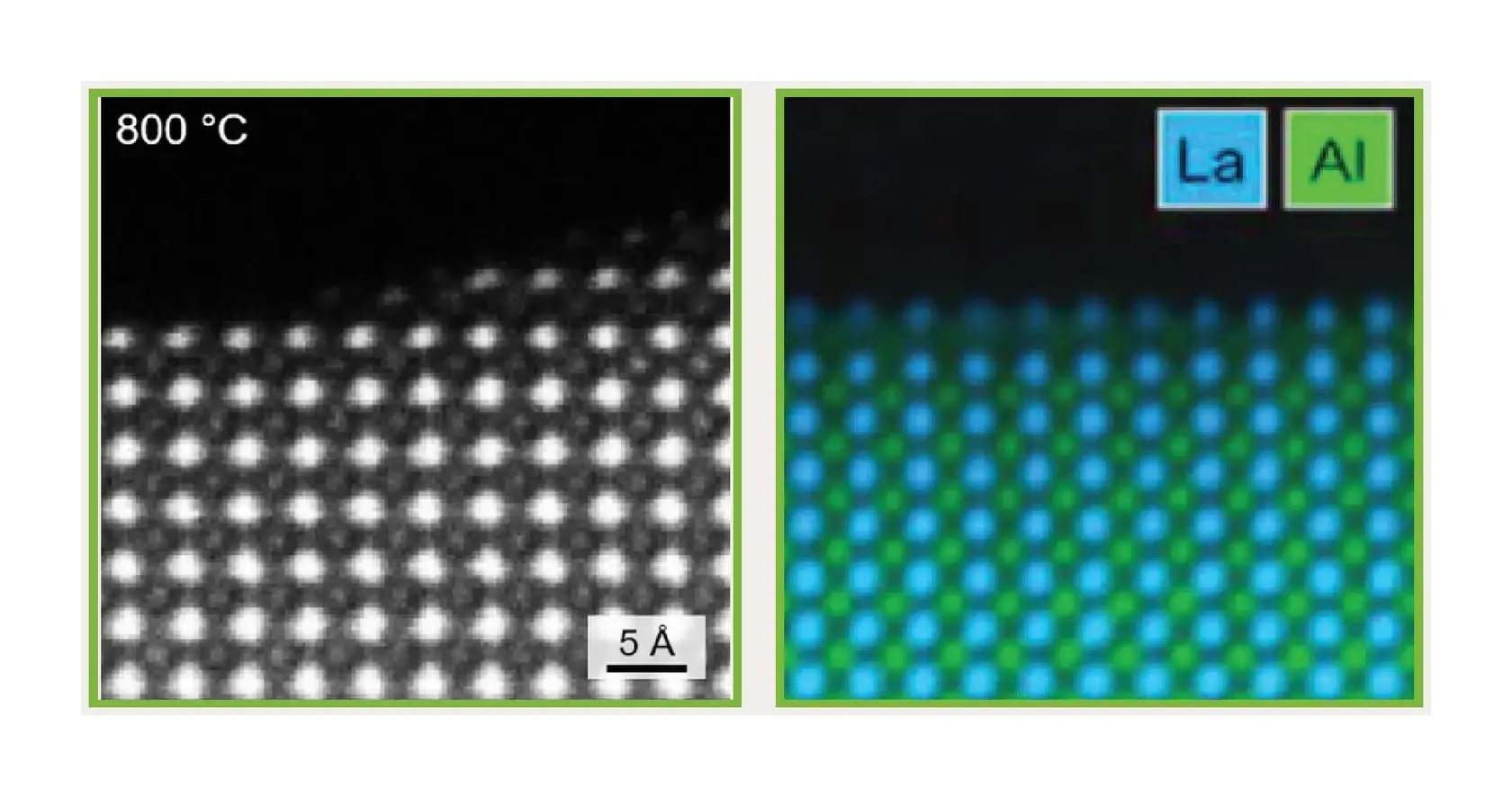
Atomic-resolution STEM image at 800 degrees Celsius beside the corresponding lanthanum and aluminium EDS maps
04

High-impact results

Obtaining truly “game changing” experimental results is the goal of any researcher, whether in academia or industry. In this study, researchers used the Wildfire system to investigate the atomic-scale transformation of SrFeO2.5 into the infinite-layer SrFeO2 during in situ heating experiments in the TEM. By combining atomic-resolution imaging with controlled annealing conditions, the team was able to directly observe oxygen release, lattice reorientation, and transient structural states during the phase transformation process. These insights provided a deeper understanding of the mechanisms governing infinite-layer oxide formation and resulted in a Nature Chemistry publication.

Monitoring the formation of infinite-layer transition metal oxides through in situ atomic-resolution electron microscopy, Sang Ho et al., Nature Chemistry 2025, DOI: 10.1038/s41557-024-01617-7

Wildfire application fields

Materials Engineering

Materials engineering

Study phase transformations, grain growth, sintering and recrystallization processes at elevated temperatures.

Materials for Energy Applications

Materials for energy applications

Investigate catalysts, battery materials, solar cells and fuel cell components under realistic thermal conditions.

Soft Matter Systems

Soft matter systems

Observe polymers, biological specimens and organic materials during thermal processes.

LowD Materials

Low dimensional materials

Study 2D materials, nanowires and quantum dots at elevated temperatures to understand growth and transformation mechanisms.

Nanotechnology

Nanotechnology

Investigate nanoparticle dynamics, nanostructure evolution and nanoscale phenomena during heating.

In situ heating in TEM

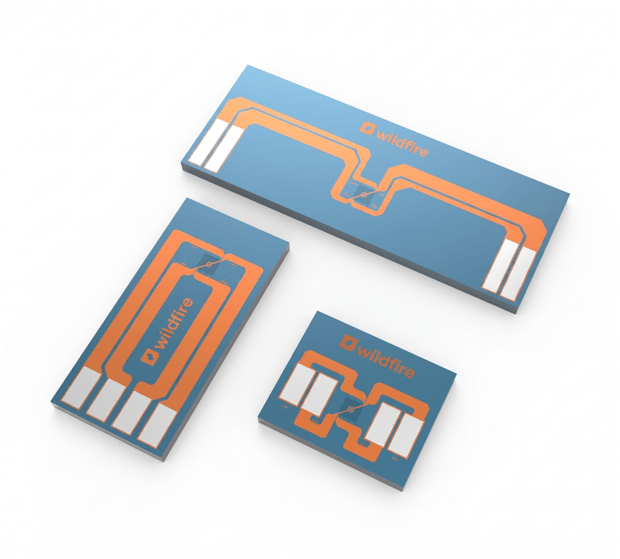
Nano-Chip

The Nano-Chip is the heart of the Wildfire system and allows fast heating and quenching with the ultimate three dimensional stability. The 4-point-probe method enables local measurement of the temperature with fast feedback for immediate stabilization and accurate temperature.
Read more about the Nano-Chip
Chips on white

Sample holder

The double tilt Wildfire TEM sample holder provides precise α (X) and β (Y) tilting via a high-precision cradle, allowing researchers to easily align samples along specific zone axes for stable, atomic-resolution imaging. Its robust design and unrivaled mechanical stability minimize drift and maintain atomic-level resolution across the entire tilt range.
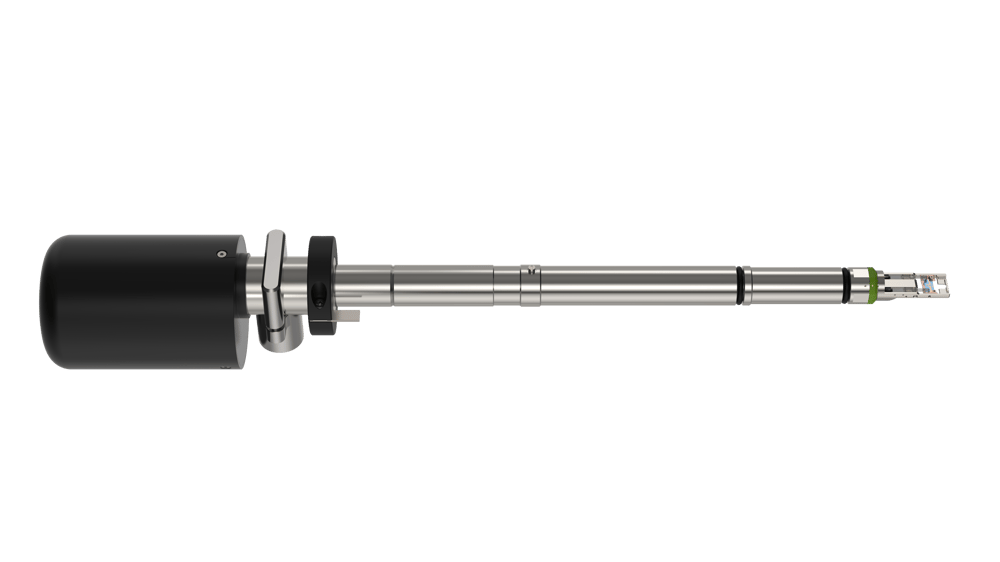
Double tilt
Mechanical stability
Wildfire JEOL holder 45 degree inclination side view - High RES

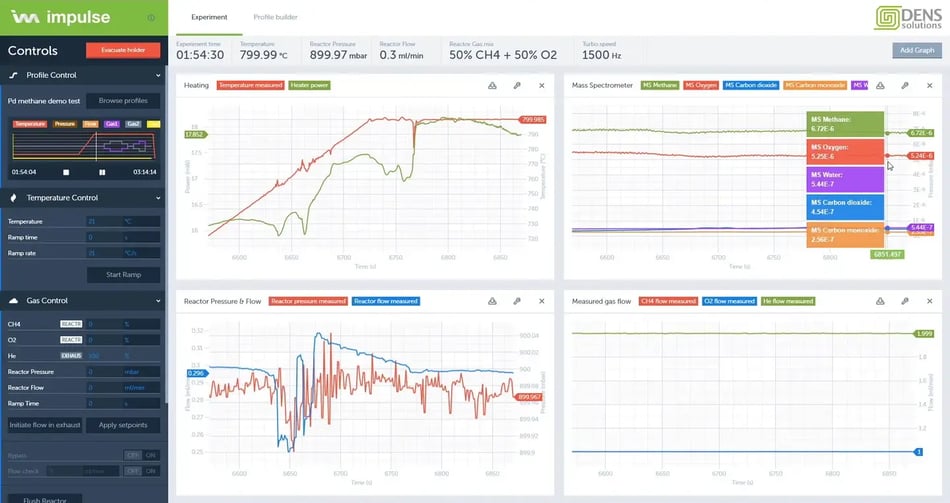
Impulse software

The new Impulse software provides the user with full control over sample’s temperature. It enables faster experimental setup, easy customization of the workspace and easy monitoring of the experiment.
Read more about Impulse
The Impulse dashboard during a gas heating experiment, with live temperature, mass spectrometer, pressure and flow graphs

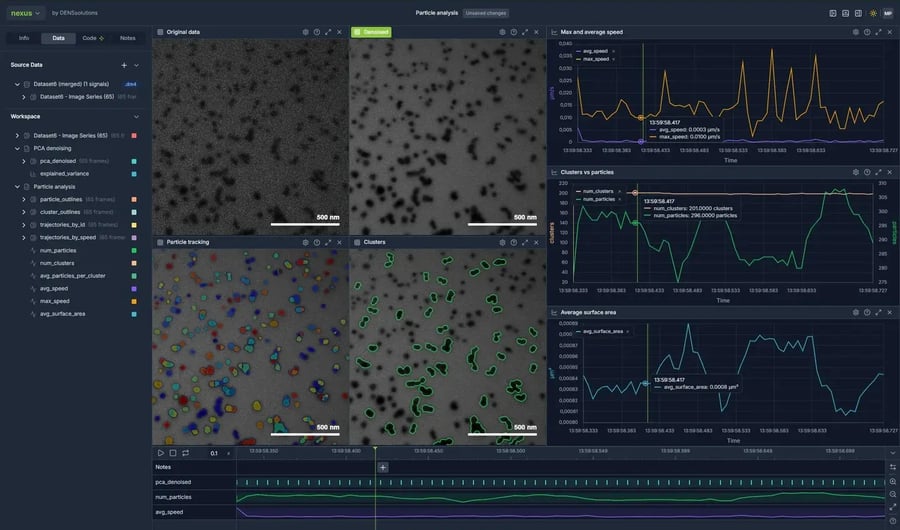
Nexus software

Nexus brings the whole experiment back together afterwards. Import data from GMS, TIA, Velox and Impulse into one synchronized workspace and view TEM images alongside the temperature and electrical signals on a shared timeline. Process the data in the same project with the bundled Python scripts for drift removal, smoothing and peak detection, or with your own, and export annotated videos and figures that combine images, graphs and metadata.
Read more about Nexus
The Nexus workspace showing a particle analysis: the original and denoised image series with particle tracking and cluster outlines, and the speed, cluster and surface-area signals on a shared timeline

What researchers say

In situ Transmission Electron Microscopy is one of the most exciting avenues for future breakthroughs in the characterization of dynamic processes in nano scale materials and devices. The DENSsolutions sample heating systems have performed impressively in experiments carried out in the Ernst Ruska-Centre.
Professor Rafal Dunin-Borkowski
Professor Rafal Dunin-Borkowski Ernst Ruska-Centre, Forschungszentrum Jülich, Germany
The temperature accuracy and spatial stability of the DENSsolutions heating holder are truly impressive – much better than alternatives we tried. Our research on liquid dynamics with time-resolved diffraction would be impossible without it.
Professor Paul Voyles
Professor Paul Voyles Materials Science and Engineering, University of Wisconsin-Madison, USA
The DENSsolutions holder impressed me with high resolution imaging and extreme stability at high temperatures. It is exciting that the picture taken with the DENSsolutions holder shows superior performance compared to other holders. As long as we have got the DENSsolutions holder, we have got the in situ world spinning in our hand.
Professor Xiaoyan Zhong
Professor Xiaoyan Zhong Tsinghua University Beijing, China
In situ TEM provides a new dimension in dynamic structural studies of a range of technologically important materials. The Department of Materials at Oxford will use the DENSsolutions sample heating holder in a number of projects related to catalysis and low dimensional carbon materials. We have chosen this solution for its unrivaled stability and control.
Professor Angus Kirkland
Professor Angus Kirkland Professor of Materials, University of Oxford, United Kingdom

Top research using Wildfire

Loading publications…

Frequently asked questions

Find answers to the most common questions about the Wildfire.

What is the tilt range of the Wildfire system?
Maximum alpha (X) and beta (Y) tilts typically reach 15°–25°, determined by your microscope model, pole piece geometry and EDX detector setup. Please contact us to verify the specific tilt range for your microscope.
What is the best achievable resolution at elevated temperature?

The resolution of 0.6 Å can routinely be achieved at 1000 °C. The resolution is dependent on your TEM; however, the achievable resolution at elevated temperature will be as good as for your standard TEM holder.

What is the temperature range for the Wildfire system?

The Wildfire system can heat from room temperature up to 1300 °C.

Is Wildfire compatible with EDX?

Thanks to a small heater that consumes only a few mW of power, EDX signals can now be acquired at temperatures up to 1000 °C. Performance greatly depends on your specific EDS brand, model, sample tilt, acquisition conditions, etc.

Can a Wildfire system be used for biasing experiments?

Yes, Wildfire systems having  6 or 8-contact in situ TEM holders can be upgraded to a Lightning system to perform in situ heating and/or biasing experiments. For more information, please contact your local distributor and reach out to us directly.

Brochure & application notes

Ready to explore Wildfire?

Contact our team to discuss the temperatures your experiments reach, and receive a tailored Wildfire quote.