

HydroBolt
Bulk electrochemical stage for SEM, FIB and benchtop experiments
HydroBolt is DENSsolutions' bulk electrochemistry stage designed for scanning electron microscopes and table-top systems. Perform real-time electrochemical experiments while imaging surface and cross-section changes at high resolution.
Why HydroBolt
Three capabilities, one stage
What you can watch while the cell is running, how the setup keeps the measured potential honest, and how the same chip carries the sample on to the TEM.
In situ electrochemical studies
- Liquid biasing SEM characterization. Enables in situ liquid biasing in SEM and FIB microscopes using a MEMS-based stage with mL-scale volume.
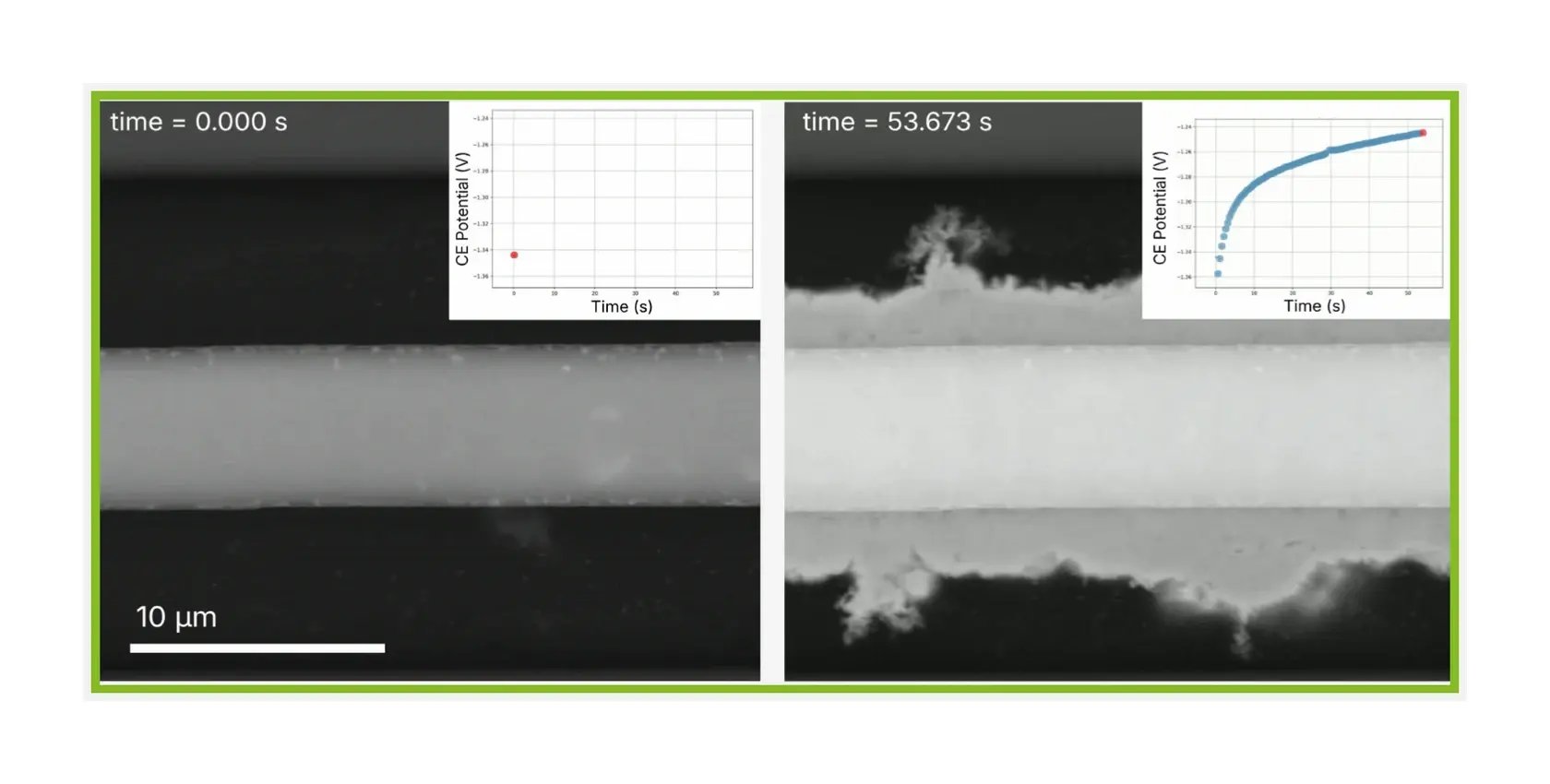
- Real-time observation. Observe real-time dynamics like electrodeposition, dendrite growth, and electrode degradation, correlating physical changes with electrochemical data.
- Broad compatibility. Works with Thermo Fisher Scientific (FEI), TESCAN and ZEISS instruments, as well as Phenom XL table-top systems, and supports SE, BSE and EDS detectors. The cell runs with static or flowing electrolyte, aqueous or organic.
Electrodeposition of Zn on Pt working electrodes as a function of potential, at the start of the experiment and after 53.7 seconds, observed by SEM. Courtesy of Dr. R. Aymerich-Armengol, Ruhr-University Bochum, Dr. A. Garzón Manjón, Catalan Institute of Nanoscience and Nanotechnology, and Dr. S. Zhang, Max Planck Institute for Sustainable Materials, Düsseldorf.
Streamlined setup
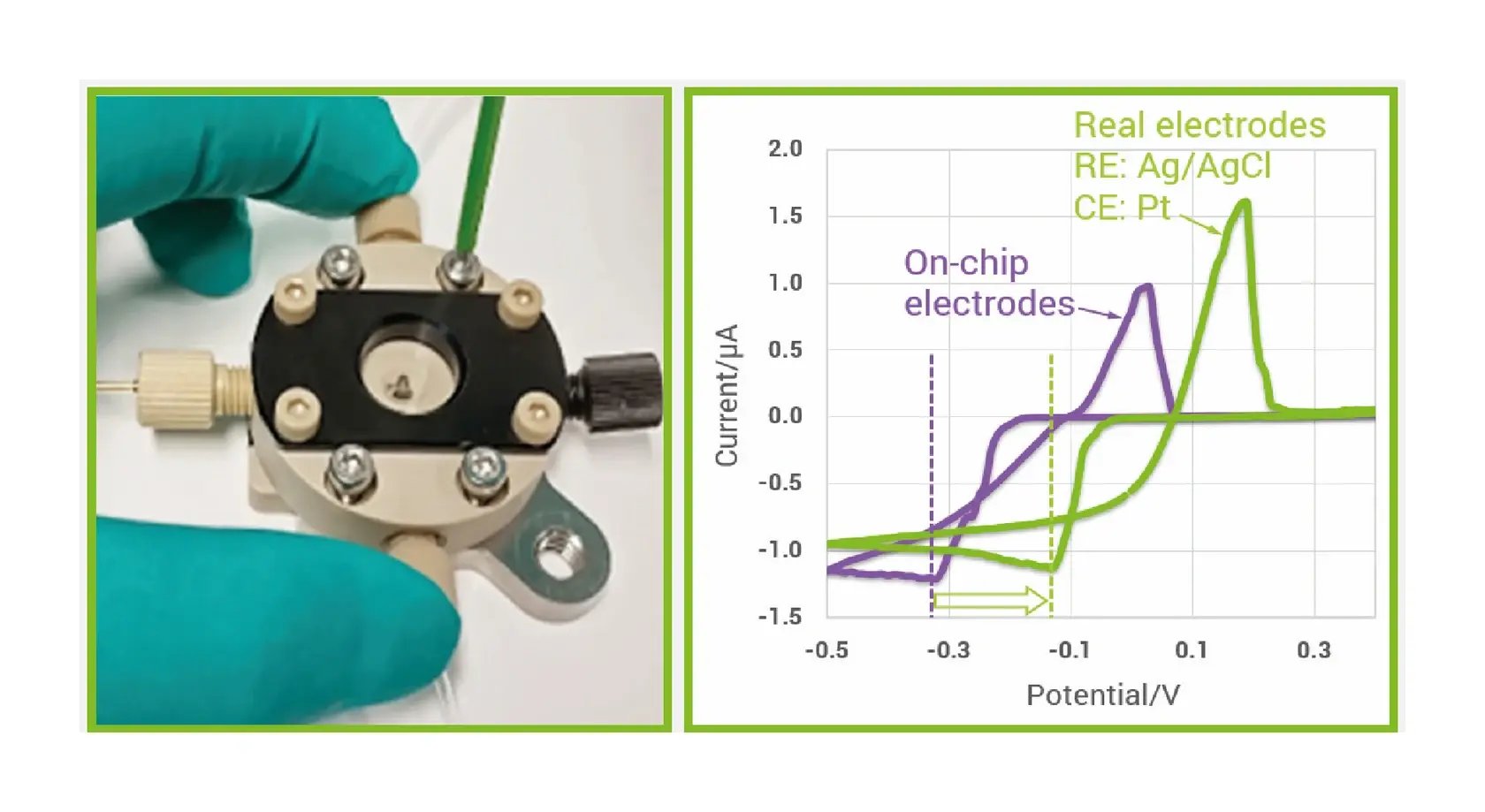
- True electrochemical response. Features external Ag/AgCl reference and Pt counter electrodes to prevent potential drift and enable prolonged cycling experiments, with an on-chip Pt or glassy carbon working electrode.
- Benchtop calibration capabilities. Electrical contacts and liquid flow ports allow users to conduct preliminary benchtop experiments and calibrate reference potentials, measuring how far the on-chip pseudo-reference shifts against the bulk Ag/AgCl electrode.
- Glove-box compatible assembly. The robust casing assembles quickly by tightening seal screws, allowing for simple setup directly inside a glovebox.
HydroBolt features a robust casing that is assembled by simply tightening the seal screws. The use of a real Ag/AgCl reference electrode ensures accurate and reliable electrochemical data. Cyclic voltammetry potential range: ±0.5 V; scan rate: 0.1 V/s; step: 0.01 V; electrolyte: 20 mM CuSO₄ + 10 mM KH₂PO₄.
Cross-platform characterization
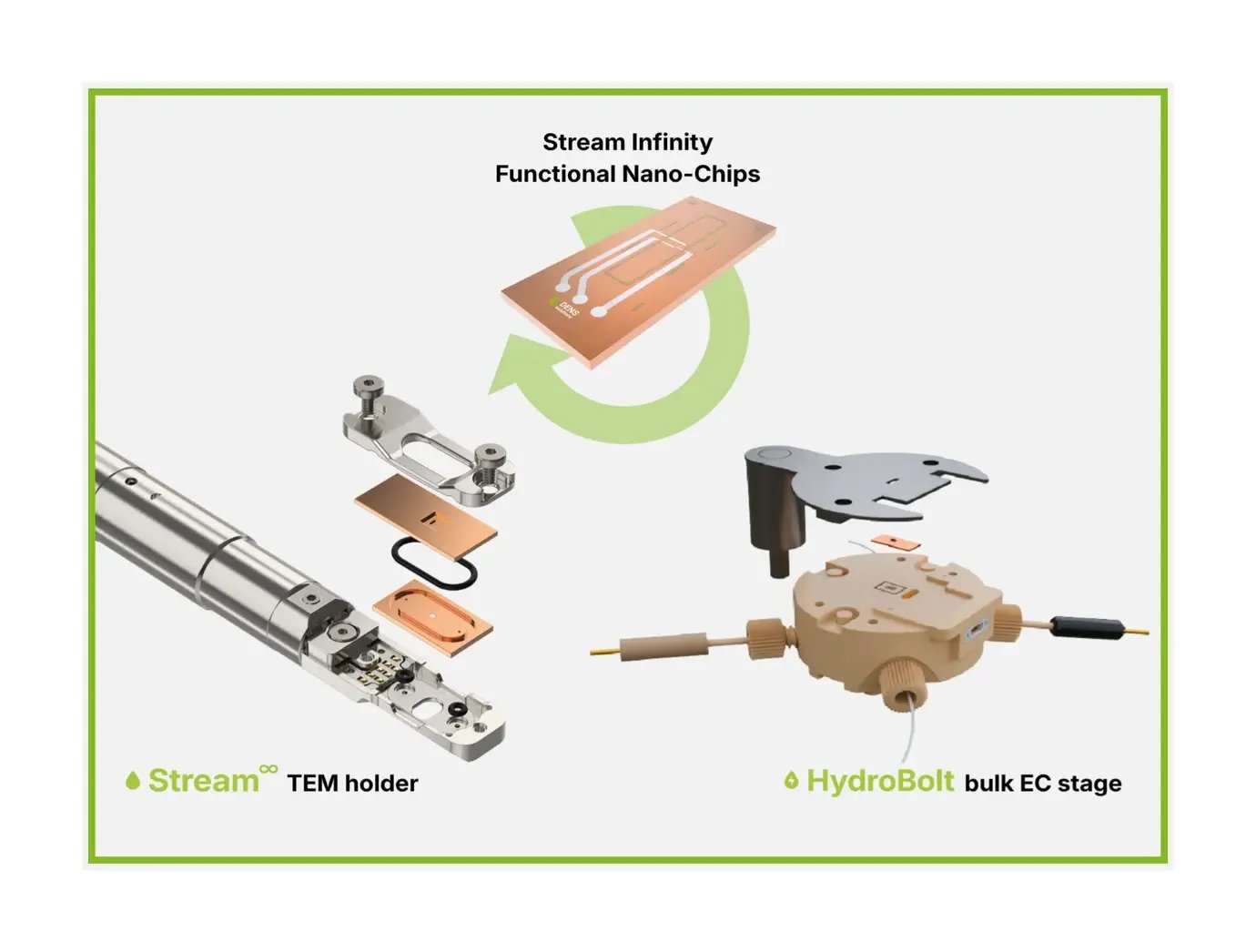
- Multi-scale and correlative analysis. Unlock cross-correlative liquid-phase TEM workflows with a shared universal Nano-Chip between in situ SEM and TEM holders. By transferring the exact same chip between the microscopes, one can perform experiments both at µm and nm scales, tracking specimen dynamics as a function of electrical potential, fluid flow and temperature.
- Plug-and-play integration. Shares the exact same software, connections, and control electronics as your existing DENSsolutions Stream Infinity TEM systems.
Application Fields
HydroBolt application fields

Batteries
Investigate battery electrode reactions, lithium plating/stripping, and solid-electrolyte interphase formation in real time.

Electrocatalysis
Observe electrocatalytic reactions and study the structure-activity relationship of catalysts in liquid environments.

Fuel cells
Study fuel cell catalyst degradation, membrane electrode assembly dynamics, and corrosion mechanisms.
Software
Correlate your SEM and TEM data in one workspace
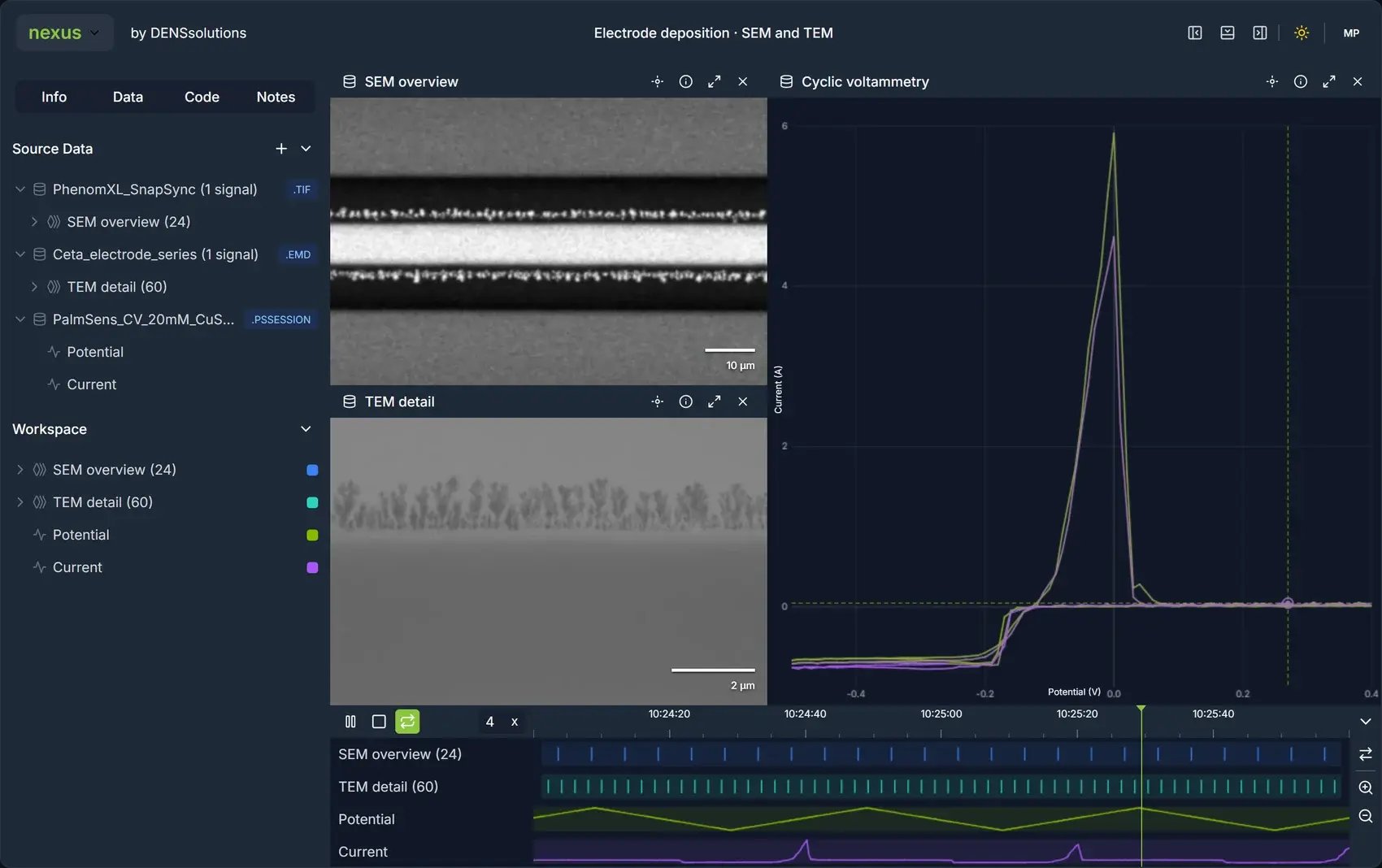
HydroBolt brings liquid and biasing into the SEM, and Nexus brings those results together with your TEM work. Load the SEM recordings from a HydroBolt session and the TEM recordings of the same sample into one workspace, and they sit side by side on a shared timeline with the bias and flow logs from Impulse underneath.
That is multi-scale characterization without stitching sessions together: an SEM overview of the full electrode next to STEM detail of a single feature, correlated in time and ready to process, annotate and export together. Nexus reads the major SEM and TEM formats directly, so nothing has to be converted first.
Built on proven Stream technology
HydroBolt uses the same MEMS technology as the Stream Infinity TEM liquid and electrochemistry system. The microfluidic cell design, sealing approach, and electrode integration are directly derived from Stream's proven architecture, refined through years of TEM liquid experiments.
Researchers already working with Stream will find HydroBolt immediately familiar. The same chip handling, electrolyte loading procedures, and Impulse software environment apply, ensuring a smooth transition from TEM to SEM electrochemistry. HydroBolt also shares the same connections and control electronics as your existing Stream Infinity TEM system, so it needs no hardware of its own.

Resources
Brochure
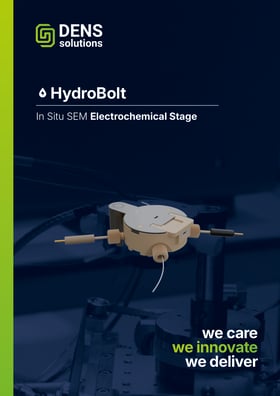
Download the HydroBolt brochure
For more information on workflow, applications and specifications.
Download the brochure