
Infinity Light
Add light to your Climate or Stream Infinity system
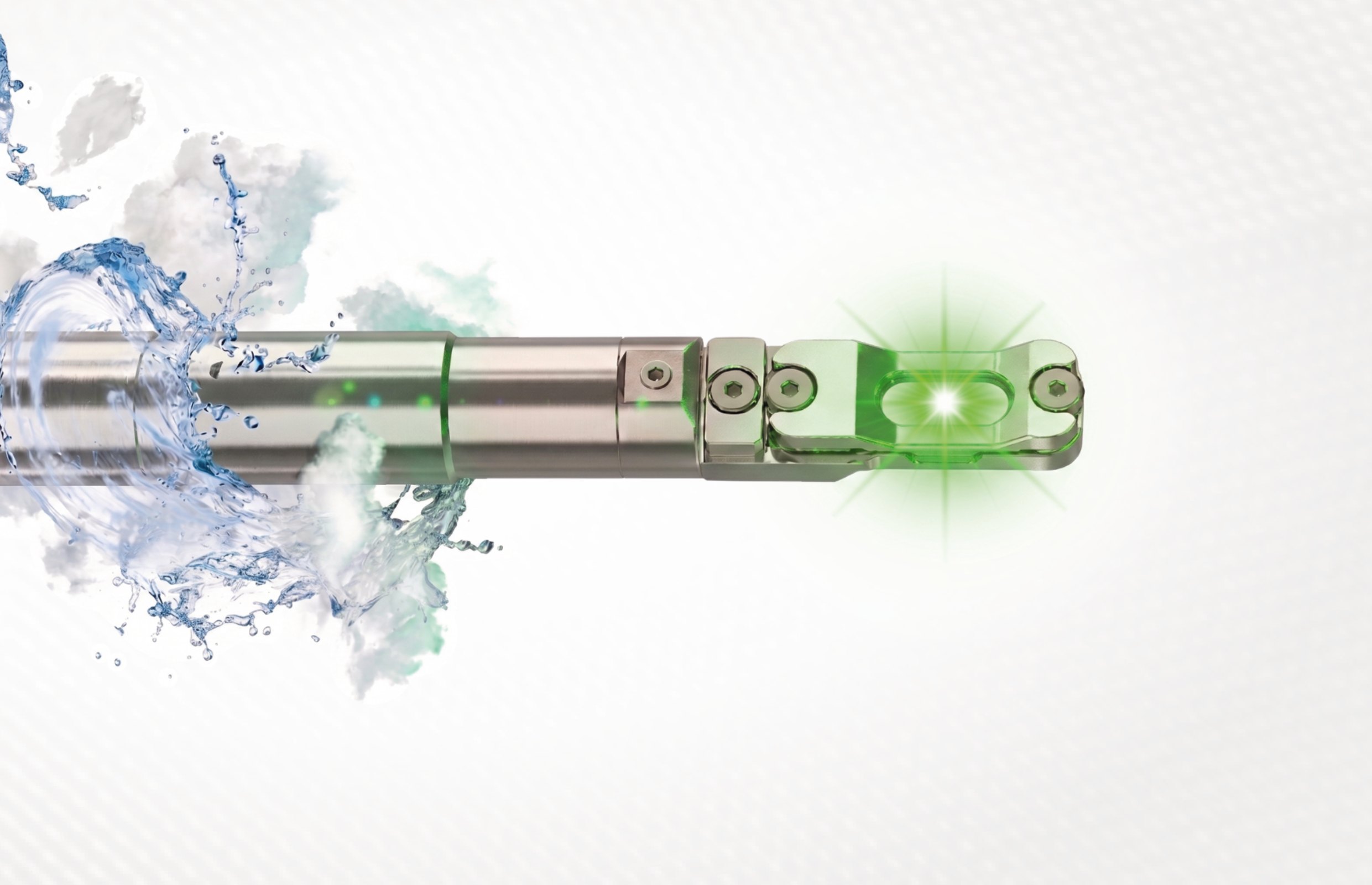
The Climate and Stream Infinity systems now offer advanced optical capabilities. A new optomechanical tip brings light straight into the multi-stimuli holder, so you can illuminate your specimen while applying electrothermal stimuli in both gas and liquid environments.
Why Infinity Light
Light - alongside the stimuli you already control
Infinity Light adds an optical path to the Infinity sample holder, so illumination becomes one more parameter of your in situ experiment instead of a separate one.
Simultaneous multi-stimuli
Introduce light to illuminate your specimen directly while applying electrothermal stimuli in gas and liquid environments. Illumination combines with gas or liquid flow, heating and biasing in the same experiment, so you can tell what the light does apart from what temperature and potential do.
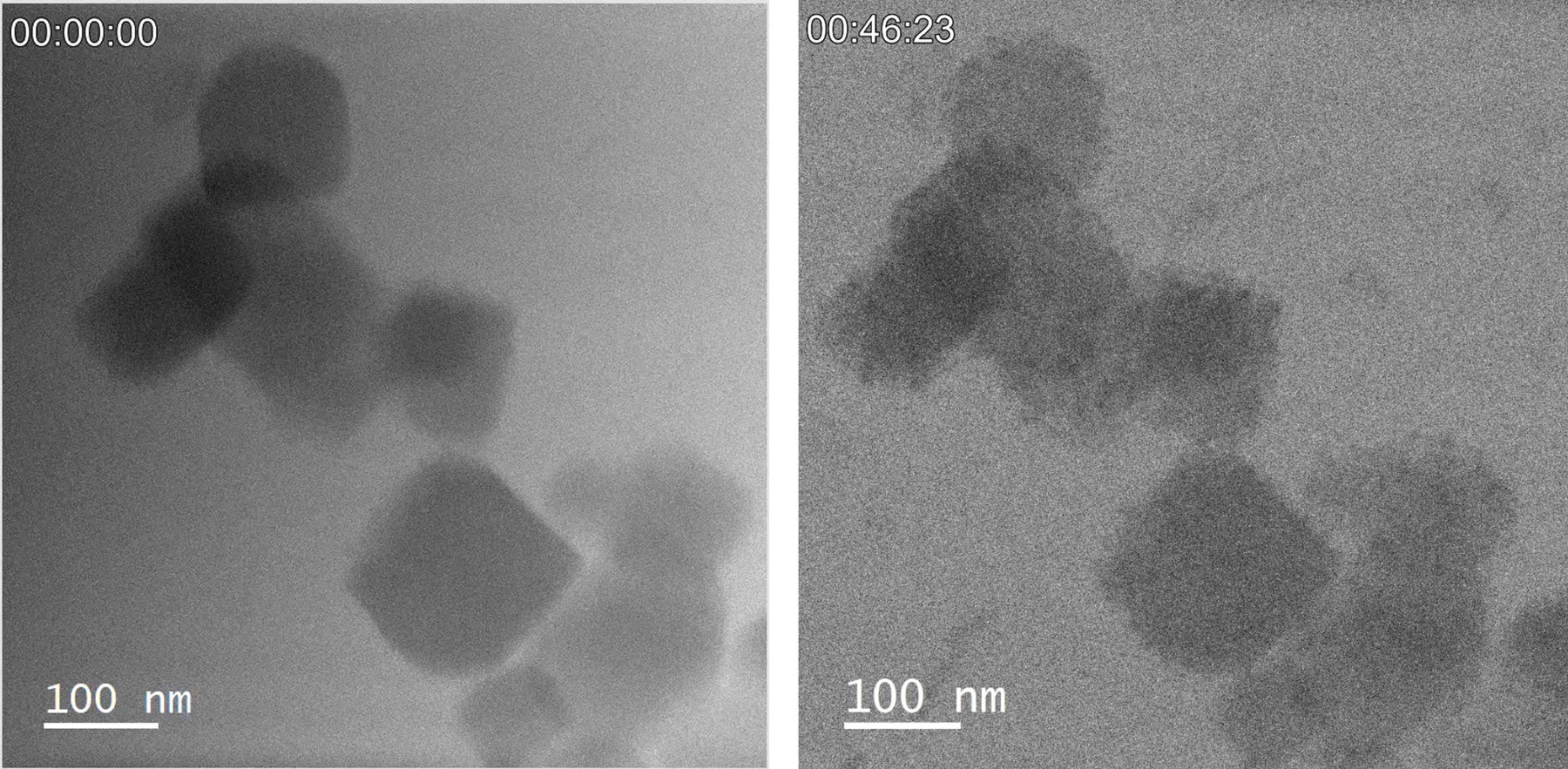
Al on SrTiO₃ catalyst in a water/methanol mixture, imaged before (left) and after (right) 46 minutes of illumination.
Unlock new applications
Ideal for advancing photo-electrochemical, photocatalysis and solar cell operando research. Reactions that only start under illumination can now be followed at the nanoscale, in the gas or liquid environment where they actually happen.
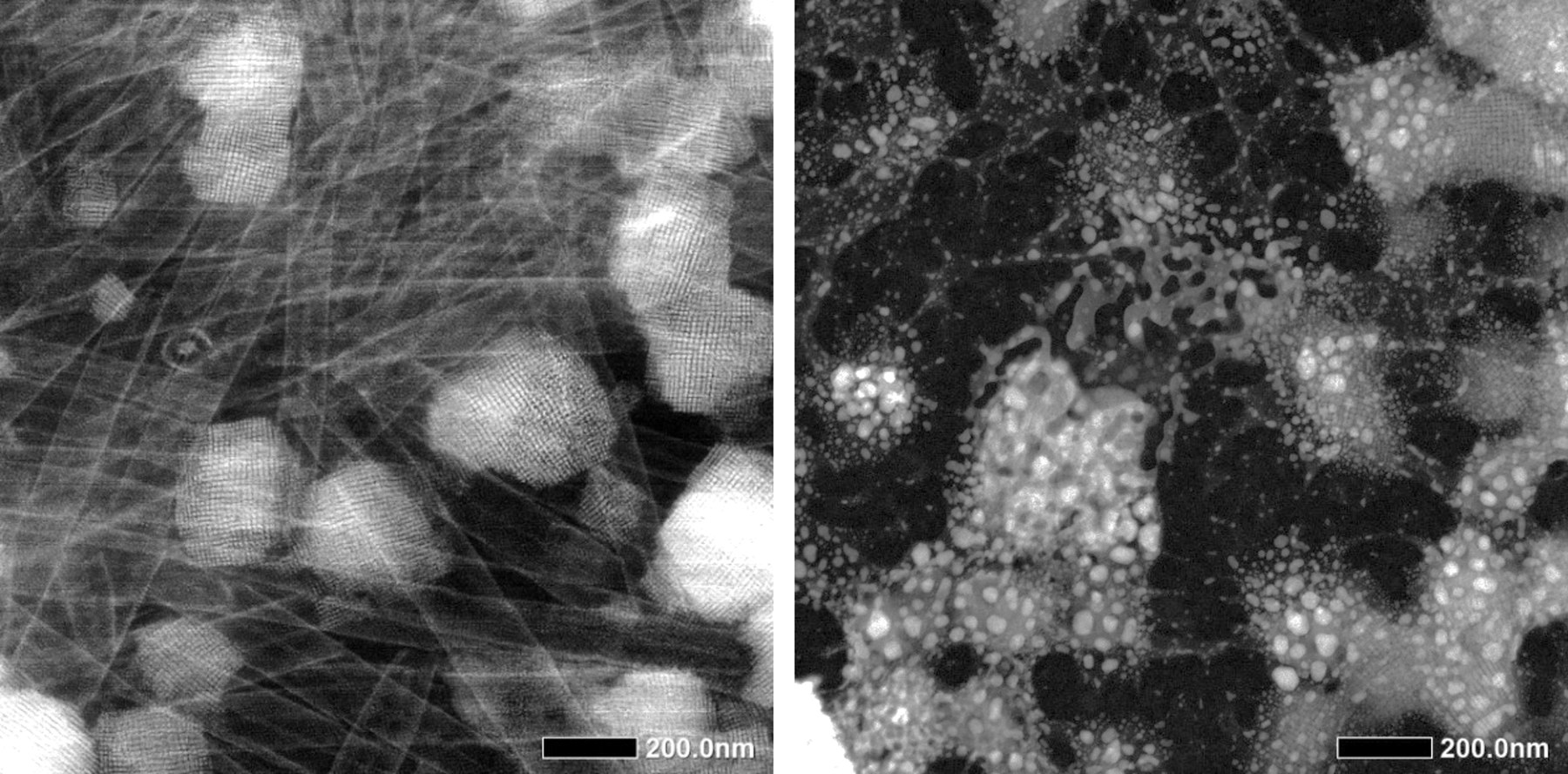
TEM images of CsPbBr₃ mesocrystals before (left) and after (right) 2.5 hr of illumination (λ = 405 nm) in air. Courtesy of Y. Tang and P. Schall, University of Amsterdam.
A convenient upgrade
Current owners of the Infinity sample holder can upgrade to the new optomechanical tip without compromising the performance of their Infinity system. The optical fibre is integrated into the tip and ends at the sample window, and the eight electrical contacts for heating and biasing stay exactly as they are.
The optomechanical tip, with the optical fibre terminating at the sample window.

Application fields
Infinity Light application fields

Photosynthesis
Study light-driven conversion in natural and artificial photosynthetic systems.

Photocatalysis
Watch a catalyst surface restructure while a photocatalytic reaction runs in gas or liquid.

Photovoltaics
Resolve phase changes and degradation in absorber materials under illumination and bias.

Optoelectronics
Correlate structure with the optical and electrical response of devices and thin films.
Resources
Flyer

Download the Infinity Light flyer
For more information on the optical capabilities, applications and specifications.
Download the flyer